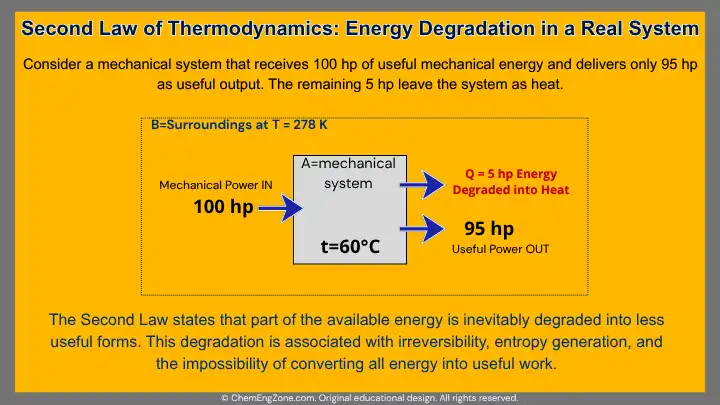
Second Law of Thermodynamics: PM 2nd Kind
The Second Law of Thermodynamics governs the direction and irreversibility of real processes, completing the energy balance framework established by the First Law.
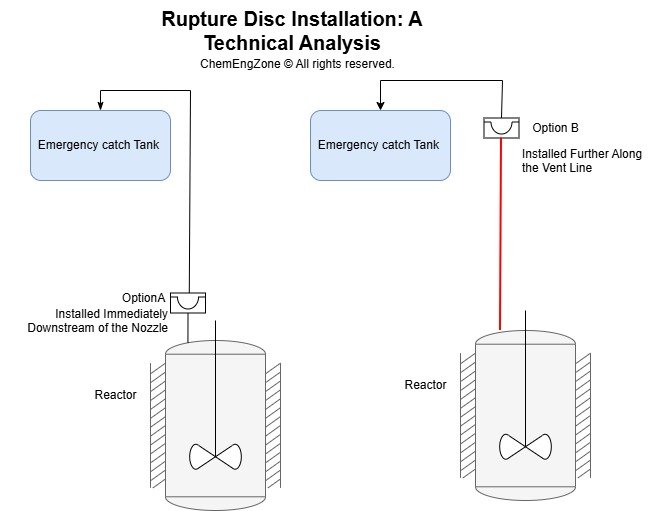
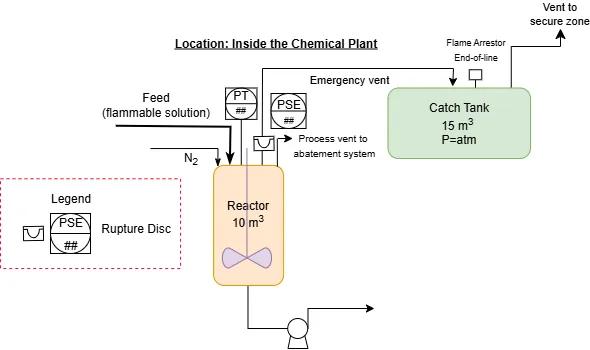
Rupture disc installation is not only a mechanical task but a hydraulic decision. This article examines how inlet line length, intermediate volume, and backpressure influence disc activation and overall relief system performance.
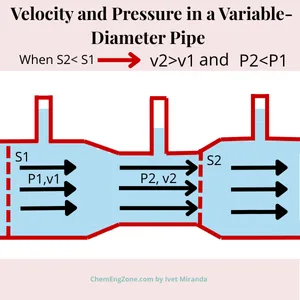
Bernoulli’s principle explains how pressure, velocity, and elevation are linked through mechanical energy conservation in fluid flow, with practical engineering applications and limitations.
Fundamental Concepts Governing Fluid Flow Fluid dynamics explains how fluids move, how pressure changes along a flow system, and why velocity increases or decreases when geometry changes. In this context, a flow system may be a pipe, a duct, a channel, or any connected path through which the fluid is transported. In chemical engineering, fluid dynamics… Read More »Fluid Dynamics Basics for Engineers
Variable Speed Drive (VSD) pumps with level control can reduce energy consumption and support industrial decarbonization. This article explains how the technology works, shows practical examples, and highlights the role of chemical engineers in achieving sustainability goals.
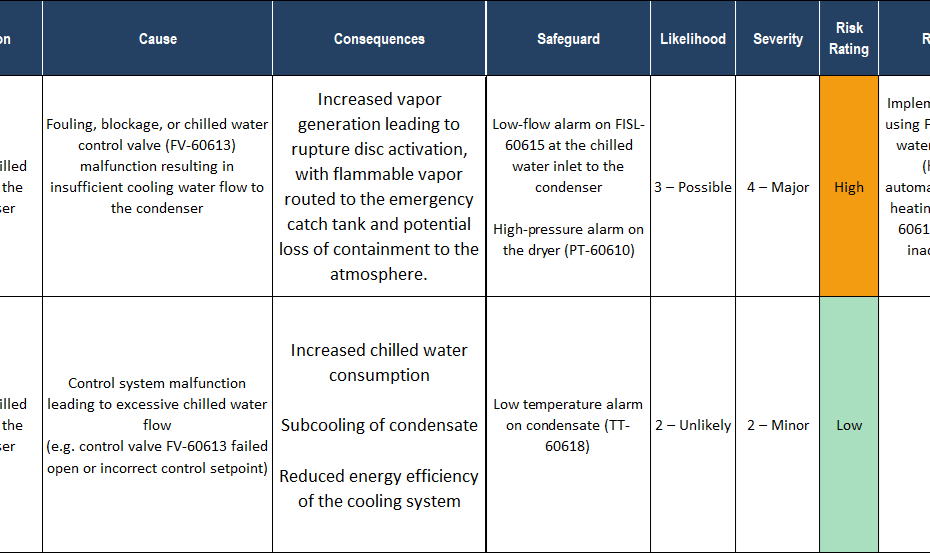
A practical HAZOP analysis example showing how deviations, causes, consequences, safeguards, and risk are evaluated using a real worksheet.
Understand the fundamentals of ATEX zone classification for gases, vapours, and mists according to Directive 1999/92/EC. This article explains where the classification applies, how to interpret Zones 0, 1, and 2, and what to consider for equipment such as pumps, piping, and tanks — including internal volumes.
Even water can lead to failure. This HAZOP example shows how overlooked piping material compatibility can cause loss of containment and safety risks.
When a rupture disc activates, it represents a process deviation that must be recorded within the Safety Management System. Depending on the outcome, it may be classified as a near miss, a contained release, or an incident requiring further investigation.
Process Engineer: Core Skills You Should Build Early