

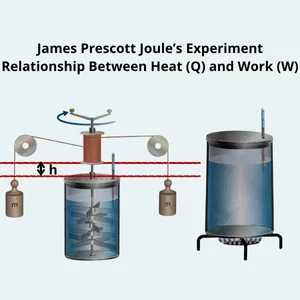

Joule’s experiment demonstrates the equivalence between mechanical work and heat, providing the experimental foundation of the First Law of Thermodynamics and the concept of internal energy.
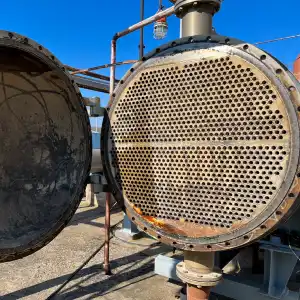
The five main unit operations in chemical engineering are Heat Transfer, Mass Transfer, Mechanical Operations, Fluid Transport, and Membrane Separation. These categories form the foundation of industrial processes, from energy recovery and separation to particle handling and fluid distribution.
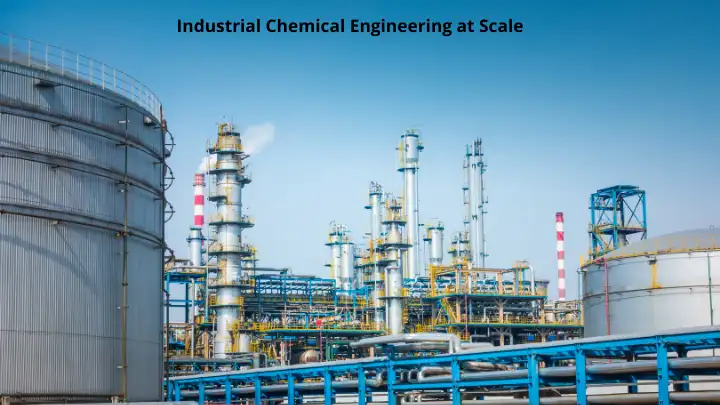
Definition and Scope of Chemical Engineering Chemical engineering is the discipline responsible for designing, analyzing, and operating industrial process systems that transform raw materials into finished products under controlled, safe, and economically viable conditions. It is not defined by laboratory glassware or isolated chemical reactions.It is defined by the ability to make complex systems function reliably… Read More »What Is Chemical Engineering? Definition & Scope
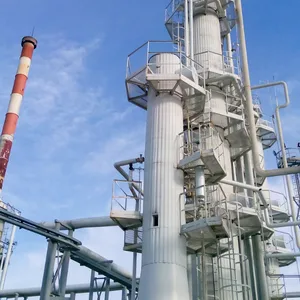
What is the Distillation Process? Distillation is a method used to separate the components of a liquid mixture by exploiting differences in their volatility. When a liquid mixture is heated, part of it vaporizes. The vapor phase is richer in the more volatile components, while the remaining liquid becomes enriched in the less volatile ones. This… Read More »How Distillation Works: Engineering Explanation

What Does a Chemical Engineer Do? Discover key roles and responsibilities across industries—from plant operations to process safety.

Discover how the safety management system pillars are applied in practice during a real HazOp and MoC project in a chemical plant.
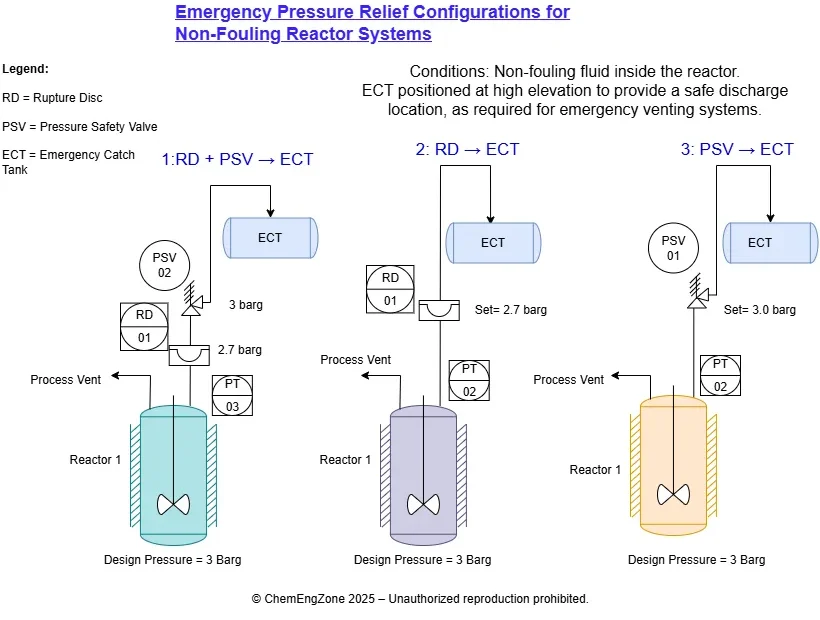
A practical engineering comparison with a real reactor example, covering PSV, rupture disc, and RD+PSV configurations used in chemical plants.