Process safety is not a separate role within a plant. It is a responsibility shared by every chemical engineer.
Start with These Articles
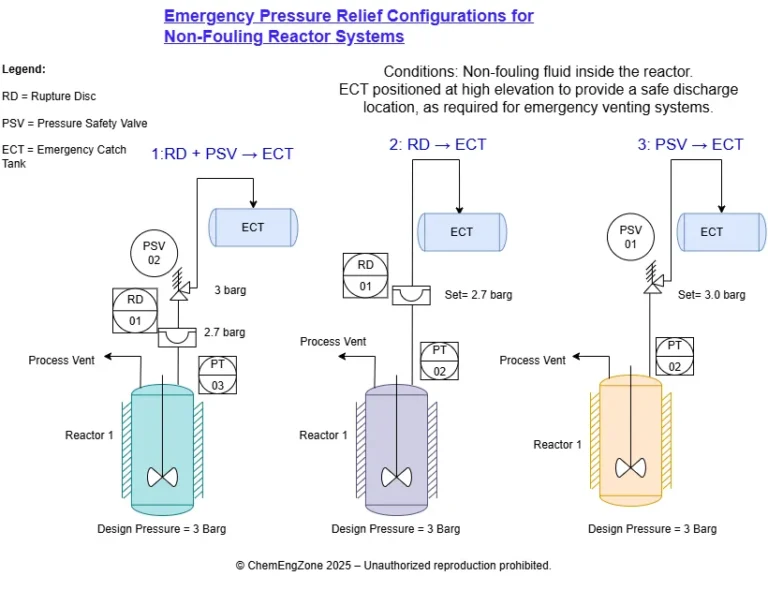
Pressure Safety Valve vs Rupture Disc: Key Differences
A practical engineering comparison with a real reactor example, covering PSV, rupture disc, and RD+PSV configurations used in chemical plants …
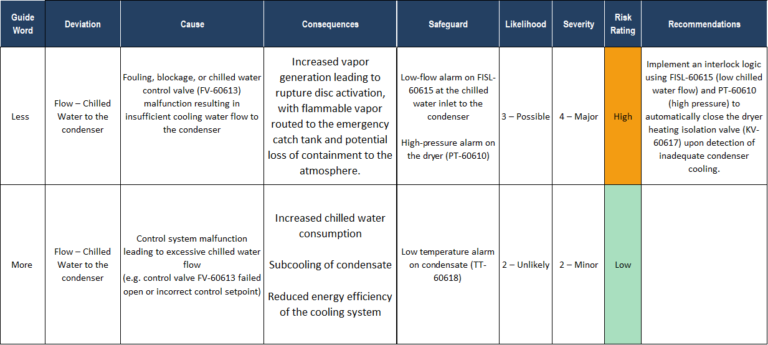
What Is HAZOP Analysis? Example and Template
A practical HAZOP analysis example showing how deviations, causes, consequences, safeguards, and risk are evaluated using a real worksheet …

Safety Interlocks: P&ID Example
Cryogenic VOC abatement systems are highly effective but face operational limits when CO₂ or water freezes at low temperatures. This …
📘 Process Safety Articles
Safety Management Framework
Hazard Identification & Risk Analysis
- What Is HAZOP Analysis? Example and Template
- HAZOP Example: Material Compatibility Failure
- LOPA & SIL: Practical Examples
Protection Layers & Safeguards
- Pressure Safety Valve vs Rupture Disc: Key Differences
- Rupture Disc Activation: Near Miss or PS Event
- Rupture Disc Installation: Where to Place It
- Safety Interlocks: P&ID Example
Equipment & Design-Related Hazards
- Vent Header Design: Safer Top Tie-In Layout
- Control Valve Leak and System Isolation
- Vacuum Tank Collapse: Hazards & Prevention
Hazardous Areas & Emission Risks
Fix the Concept – Engineering PDFs
Download concise technical summaries designed to reinforce the engineering principles behind hazard identification, risk analysis, and process safety decision-making.
Discover the PDFs in Fix the ConceptEngineering Updates & Technical Insights
Receive structured technical articles, practical engineering insights, and real industrial case analyses directly in your inbox. No noise. Only serious engineering content.