
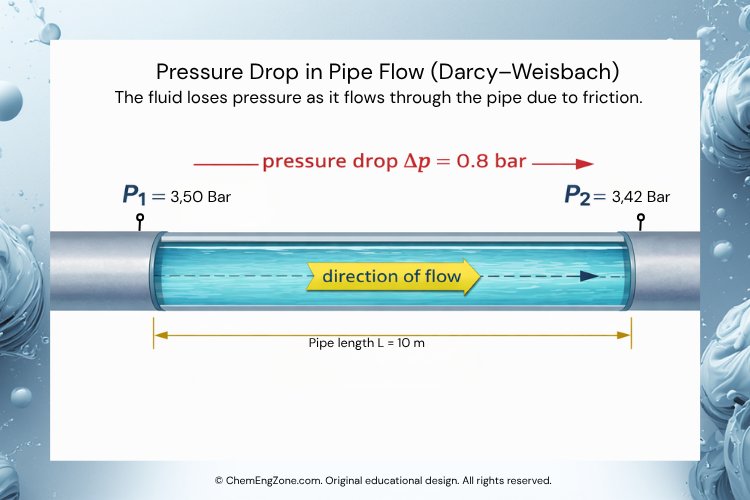
Darcy-Weisbach Equation Explained
Darcy-Weisbach equation explained for pipe pressure drop calculations, including friction factor, Reynolds number, pipe roughness, fittings, valves, and total pressure loss in real piping systems.

Darcy-Weisbach equation explained for pipe pressure drop calculations, including friction factor, Reynolds number, pipe roughness, fittings, valves, and total pressure loss in real piping systems.
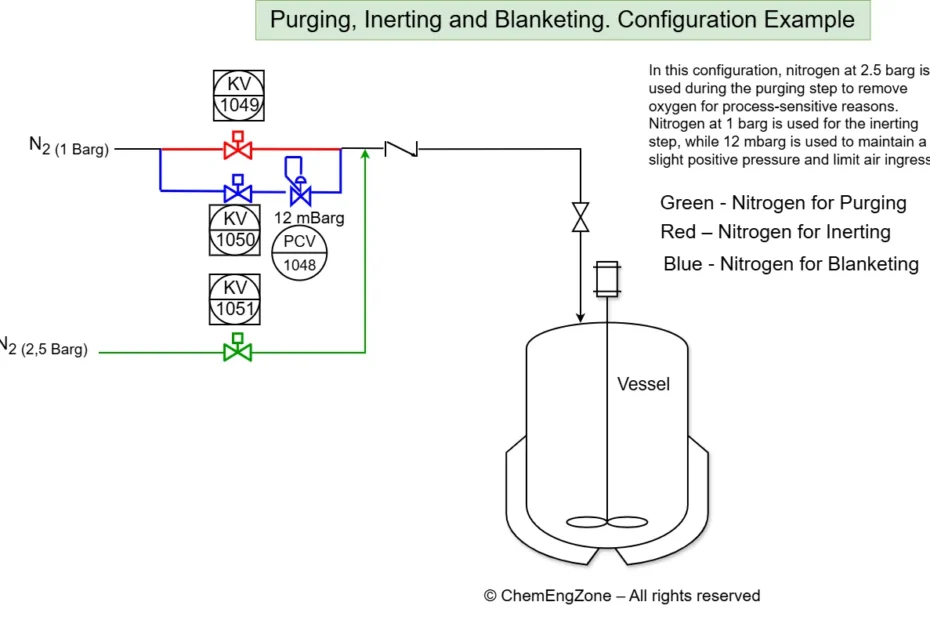
Purging replaces the atmosphere, inerting reduces oxygen below flammable limits, and blanketing maintains a protective inert gas pressure over time.
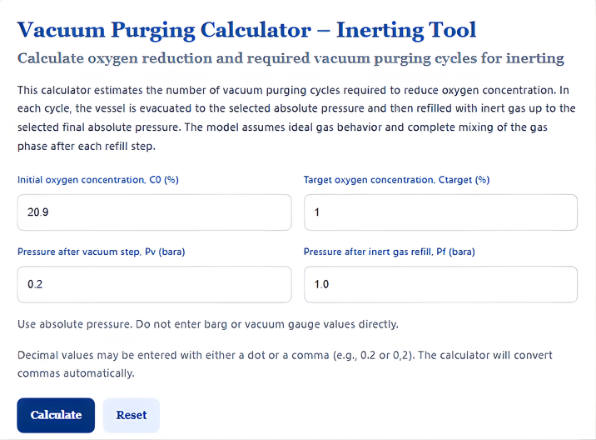
Engineering calculators for vacuum purging, pressure purging, and nitrogen flushing, developed to estimate oxygen reduction during inerting and purging operations
A LOPA analysis is required only when the residual frequency of a major accident scenario remains too high after all independent protection layers are considered. This article explains how HAZOP identifies the hazardous scenarios, how LOPA quantifies the risk gap, and when a SIL-rated safety function becomes necessary—illustrated through two practical process examples.

Cryogenic VOC abatement systems are highly effective but face operational limits when CO₂ or water freezes at low temperatures. This article explores how molecular sieves complement cryogenic units by removing critical impurities and ensuring safer, cleaner, and more efficient gas purification across complex industrial vent streams.
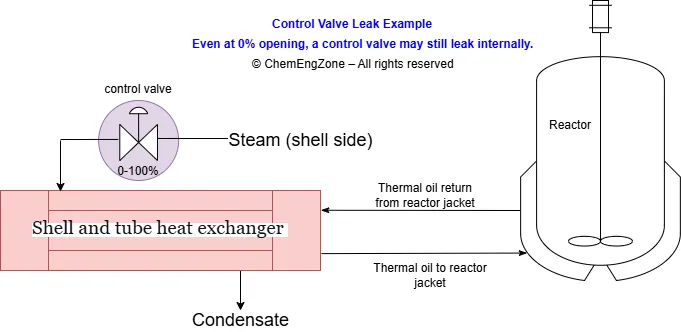
Control valve leak is expected behavior. Its impact depends on system layout and operating conditions outside normal operation.

Even relatively small pressure differentials can trigger vacuum tank collapse in thin-walled atmospheric storage tanks.
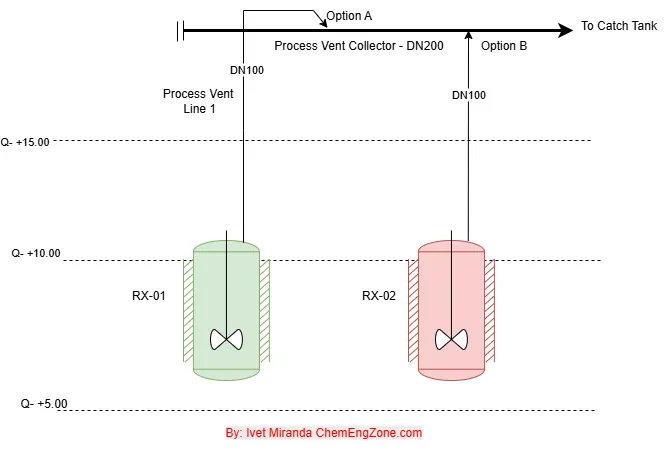
Vent header design is critical for safe reactor operation. This article explains why top tie-ins are preferred over bottom tie-ins, how to prevent condensate backflow, and which best practices ensure reliable vent systems connected to a catch tank.
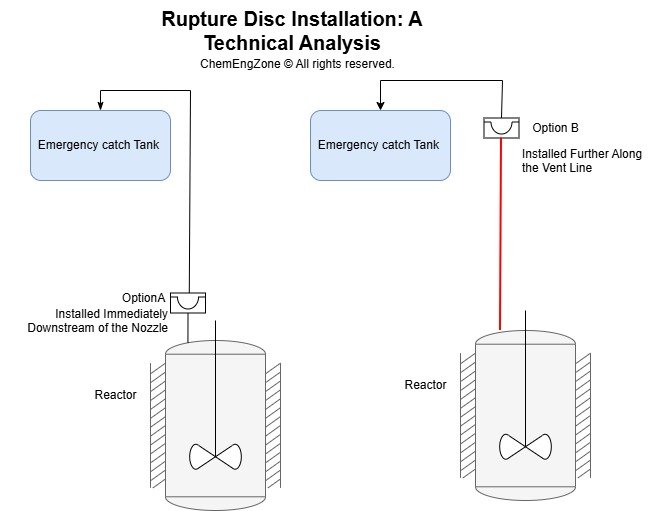
Rupture disc installation is not only a mechanical task but a hydraulic decision. This article examines how inlet line length, intermediate volume, and backpressure influence disc activation and overall relief system performance.
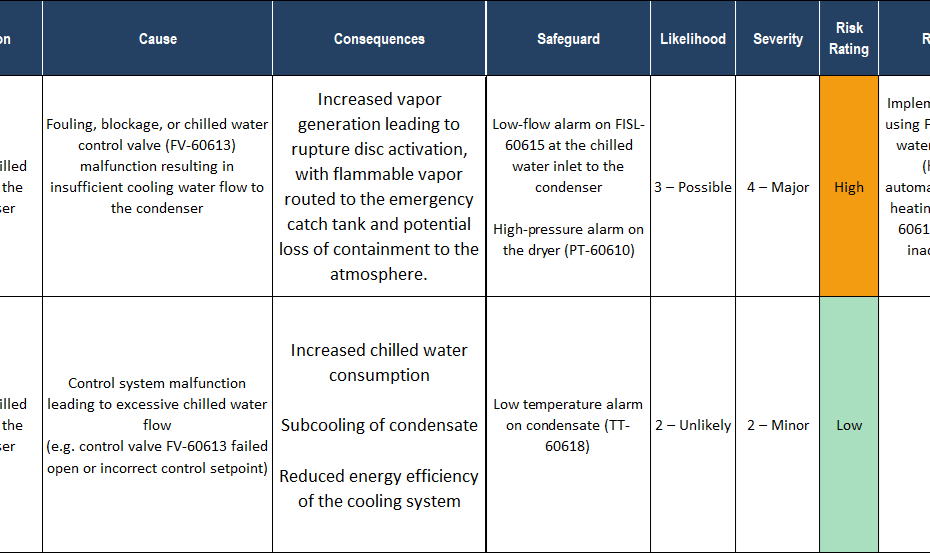
A practical HAZOP analysis example showing how deviations, causes, consequences, safeguards, and risk are evaluated using a real worksheet.