

What Is Entropy? An Engineering Perspective
Entropy in thermodynamics explained through a practical engineering example. Learn how irreversibility generates entropy in real systems.

Entropy in thermodynamics explained through a practical engineering example. Learn how irreversibility generates entropy in real systems.
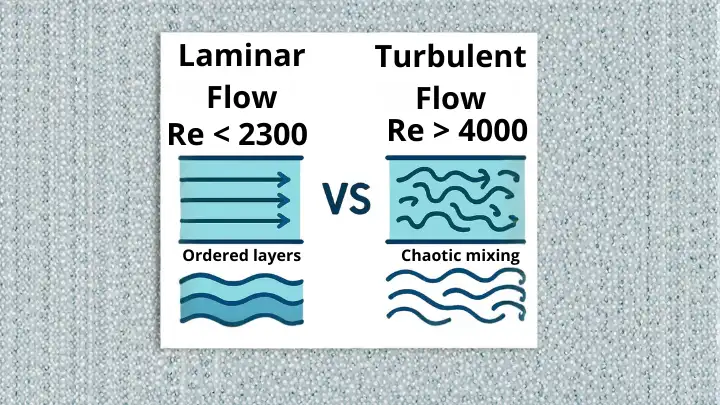
The Reynolds number is one of the most important parameters in fluid mechanics. This article explains what it represents, how it is calculated, and why engineers use it to distinguish laminar and turbulent flow.
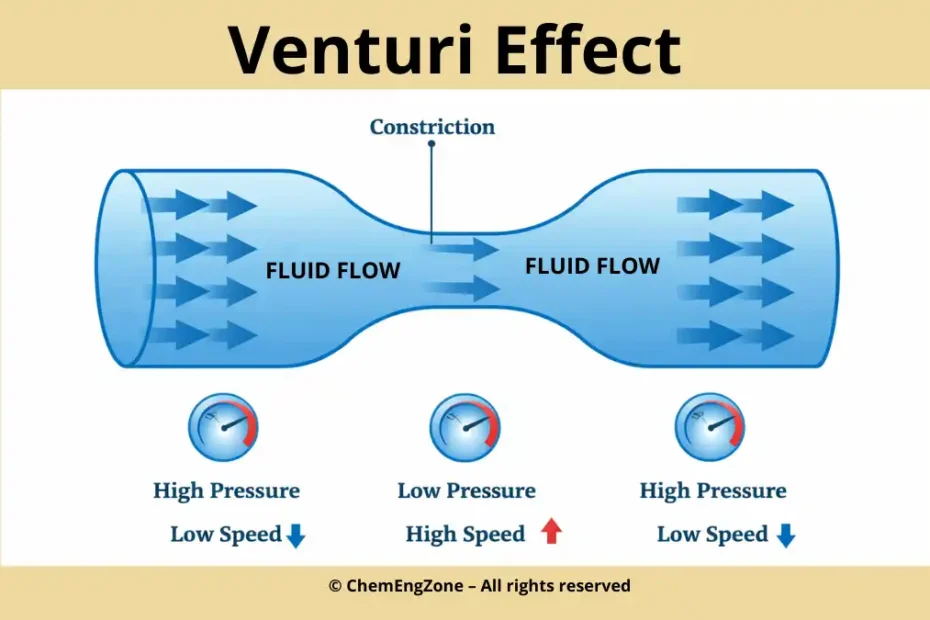
A clear Bernoulli principle example illustrating the Venturi effect and the relationship between pressure, velocity, and pipe geometry.
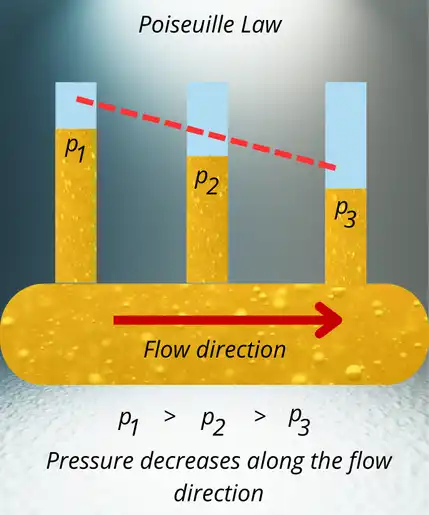
Poiseuille’s law explains why pressure continuously decreases in laminar pipe flow due to viscous energy dissipation, even in pipes with constant diameter and steady velocity.
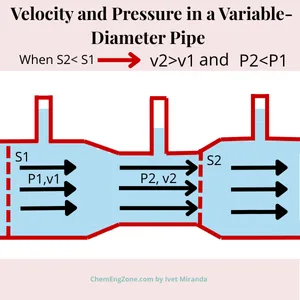
Bernoulli’s principle explains how pressure, velocity, and elevation are linked through mechanical energy conservation in fluid flow, with practical engineering applications and limitations.

Fundamental Concepts Governing Fluid Flow Fluid dynamics explains how fluids move, how pressure changes along a flow system, and why velocity increases or decreases when geometry changes. In this context, a flow system may be a pipe, a duct, a channel, or any connected path through which the fluid is transported. In chemical engineering, fluid dynamics… Read More »Fluid Dynamics Basics for Engineers