Skip to content

Process Safety

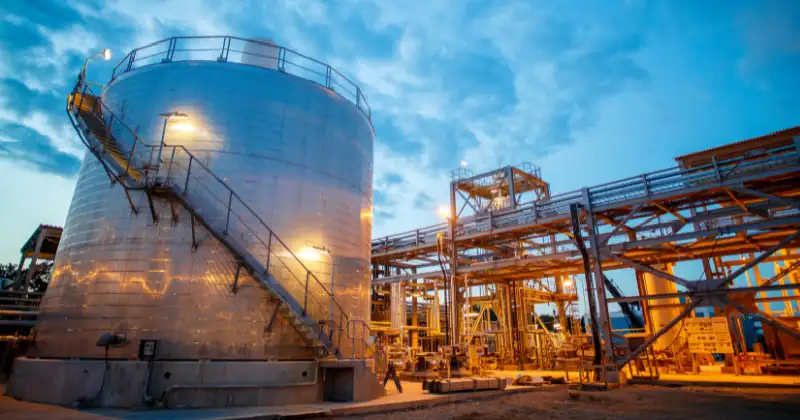
Industrial storage tank and process piping system in a chemical plant, illustrating typical equipment involved in SIL and LOPA evaluations.

LOPA & SIL: Practical Examples

  • CEZ 

A LOPA analysis is required only when the residual frequency of a major accident scenario remains too high after all independent protection layers are considered. This article explains how HAZOP identifies the hazardous scenarios, how LOPA quantifies the risk gap, and when a SIL-rated safety function becomes necessary—illustrated through two practical process examples.

P&ID example showing safety interlocks on a hot-water tank with rupture disc, control valves and emergency catch tank in a chemical plant

Safety Interlocks: P&ID Example

  • CEZ 

Cryogenic VOC abatement systems are highly effective but face operational limits when CO₂ or water freezes at low temperatures. This article explores how molecular sieves complement cryogenic units by removing critical impurities and ensuring safer, cleaner, and more efficient gas purification across complex industrial vent streams.

P&ID diagram showing control valve leakage scenario with modulating valve and on-off valve in a distillation system.

Control Valve Leakage: Often Used Upstream

  • CEZ 

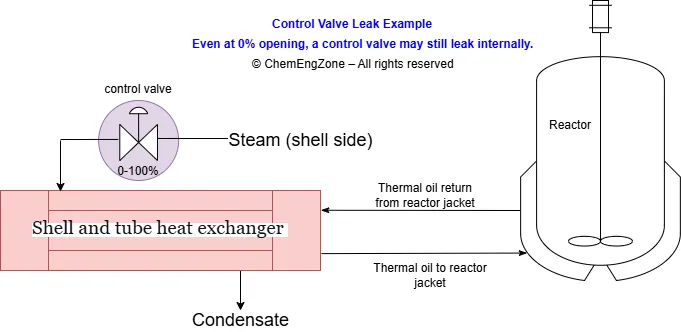
Even a small internal leakage through a control valve can change process behavior and compromise safety.
This article explains why control valves do not provide tight isolation, how their position in the line affects pressure and flow, and why leakage scenarios must be included in HAZOP analysis.

Horizontal storage tanks used in oil and gas field operations, designed for liquids and temporary storage.

Vacuum Tank Collapse: Hazards&Prevention

  • CEZ 

Vacuum conditions in storage tanks can lead to severe structural failures if not properly considered during design and operation. This article explains the main risks of vacuum in tanks, common collapse scenarios, and engineering solutions to prevent them.

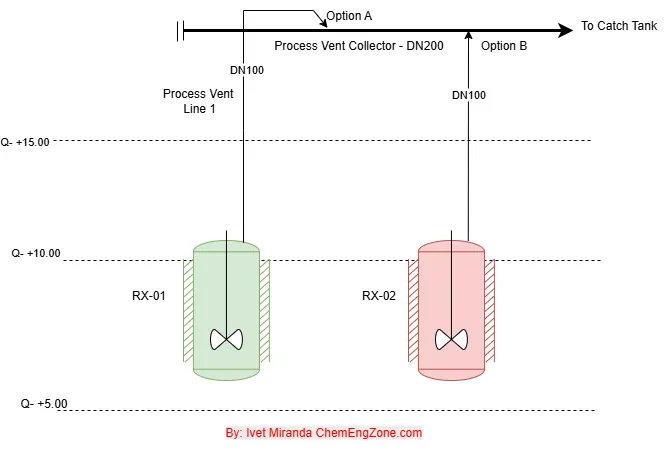
Technical diagram of two reactors RX-01 and RX-02 connected to a process vent collector (vent line DN100-DN200)

Vent Header Design: Why Top Tie-Ins Are Safer

  • CEZ 

Vent header design is critical for safe reactor operation. This article explains why top tie-ins are preferred over bottom tie-ins, how to prevent condensate backflow, and which best practices ensure reliable vent systems connected to a catch tank.

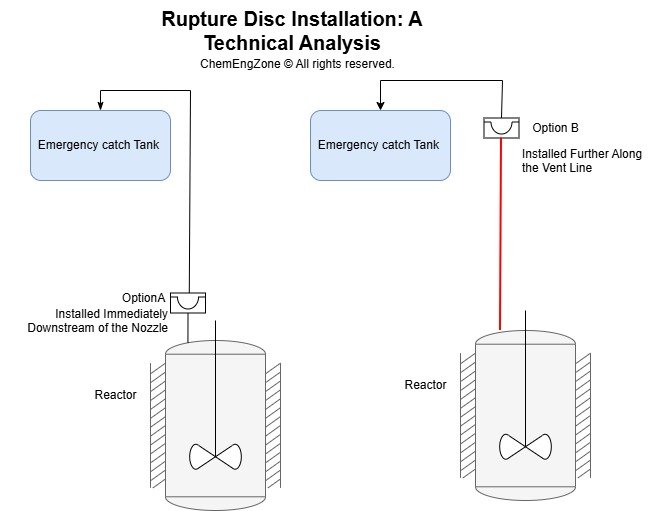
Chemical reactor vessel with flanged nozzles and a manway — industrial process equipment

Rupture Disc Positioning: Best Practices

  • CEZ 

A practical comparison between What-If Analysis and HAZOP for process safety studies, with real examples from chemical plants. Learn when to apply each method, their similarities, and how to avoid missing critical hazards.

Team of engineers performing a What-If Analysis on a whiteboard during a process safety meeting in a conference room.

What-If Analysis vs HAZOP in Process Safety

  • CEZ 

A practical comparison between What-If Analysis and HAZOP for process safety studies, with real examples from chemical plants. Learn when to apply each method, their similarities, and how to avoid missing critical hazards.

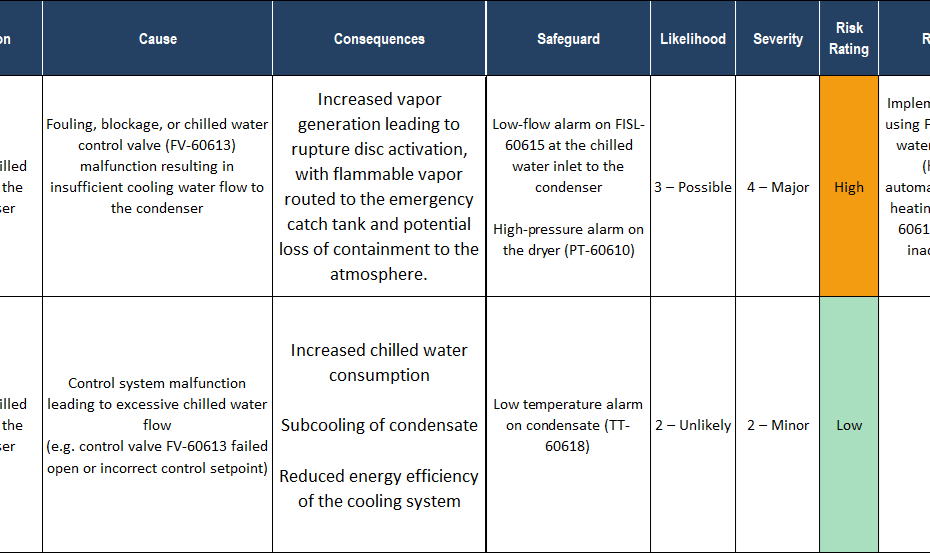
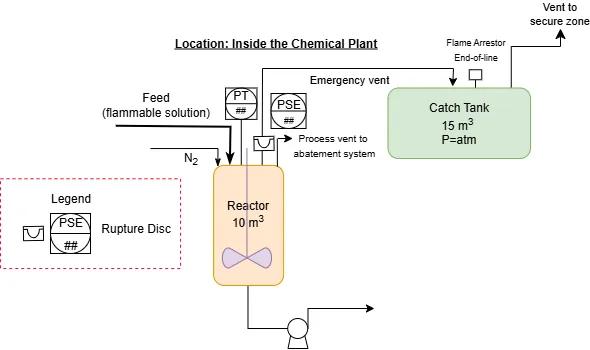
Process diagram with rupture disc protecting a reactor, discharging to a catch tank for flammable solution containment

Rupture Disc Activation: Near Miss or PS Event

  • CEZ 

When a rupture disc activates, it represents a process deviation that must be recorded within the Safety Management System. Depending on the outcome, it may be classified as a near miss, a contained release, or an incident requiring further investigation.