Skip to content

chemical engineering

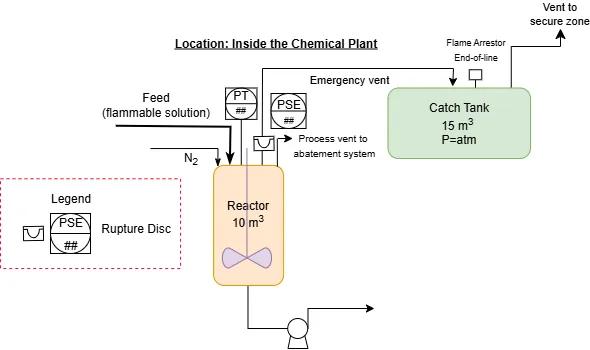
Process diagram with rupture disc protecting a reactor, discharging to a catch tank for flammable solution containment

Rupture Disc Activation: Near Miss or PS Event

  • CEZ 

When a rupture disc activates, it represents a process deviation that must be recorded within the Safety Management System. Depending on the outcome, it may be classified as a near miss, a contained release, or an incident requiring further investigation.

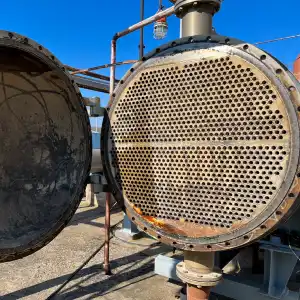
Close-up of a shell-and-tube heat exchanger used in industrial heat transfer operations

Unit Operations in Chemical Engineering: Types and Examples

  • CEZ 

The five main unit operations in chemical engineering are Heat Transfer, Mass Transfer, Mechanical Operations, Fluid Transport, and Membrane Separation. These categories form the foundation of industrial processes, from energy recovery and separation to particle handling and fluid distribution.

Circular sedimentation tanks used in industrial solid-liquid separation processes

What Is Chemical Engineering and How It Shapes Everyday Life

  • CEZ 

What Is Chemical Engineering? Chemical engineering is the branch of engineering that deals with transforming matter and energy through physical and chemical processes. It means designing, managing, and optimizing plants and operations that allow us to produce useful products on an industrial scale, like pharmaceuticals, fuels, materials, and chemicals. Chemical engineering studies can be challenging, but… Read More »What Is Chemical Engineering and How It Shapes Everyday Life