Process Engineering Example with P&ID (Free PDF)
Real process engineering example with P&ID. Learn how engineers verify process logic, equipment consistency, and system interactions in industrial analysis.
Process Reading – Engineering Example (Free PDF)
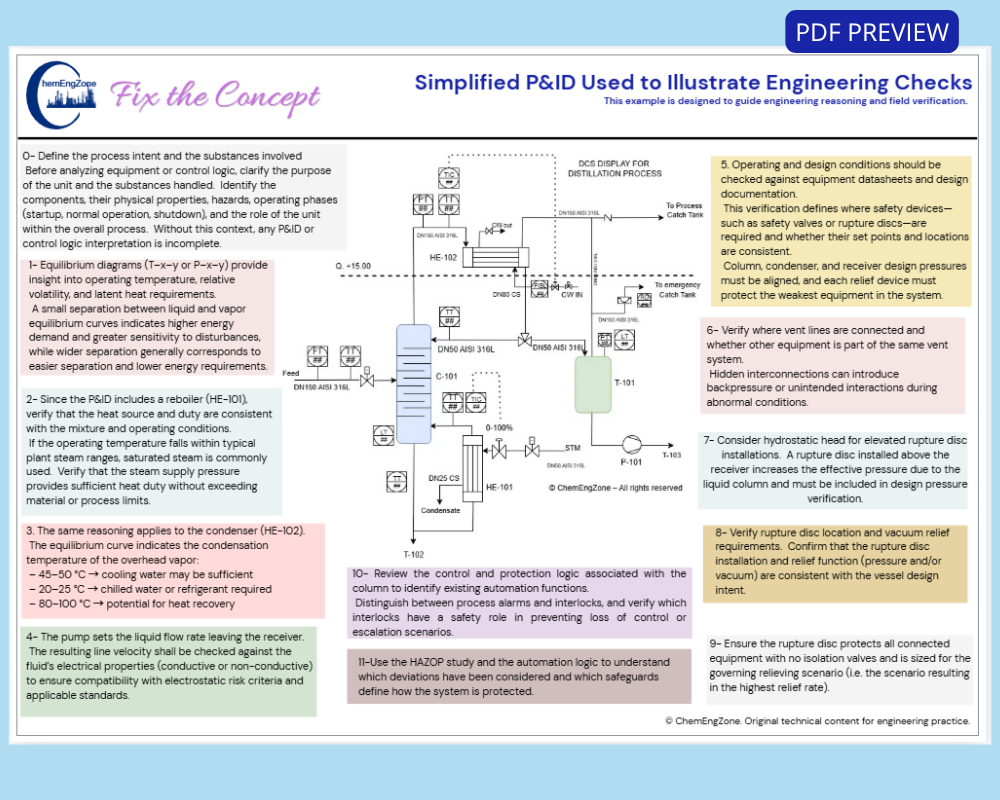
A one-page technical example showing how engineers read and interpret a chemical process starting from a P&ID or DCS screen, with focus on process logic and system-level connections.
Other Articles You May Find Useful
- Chemical Engineer Skills: 2 Field Practices
- Safety Interlocks: P&ID Example
- What Is HAZOP Analysis? Example and Template
- HAZOP Example: Material Compatibility Failure
- Control Valve Leak and System Isolation
- Vent Header Design: Safer Top Tie-In Layout
- Vacuum Tank Collapse in Atmospheric Tank
- Pressure Safety Valve vs Rupture Disc: Key Differences
Useful Engineering References
AIChE – Chemical Engineering Progress (CEP)
Practical publication by the American Institute of Chemical Engineers, covering process design, operations, and engineering practice.
Perry’s Chemical Engineers’ Handbook – McGraw Hill
Standard technical reference for chemical and process engineers, covering design principles, equipment, calculations, and safety topics.
FAQ
What will I learn from this PDF?
This PDF shows how engineers approach the interpretation of a chemical process through a practical example. It helps you understand what to look at first in a P&ID or DCS display, how to follow process logic, and how different elements are connected within the overall system.
Who is this process example for?
This example is useful for students, junior engineers, and professionals who want to improve how they read and interpret industrial processes. It is especially relevant for those working with P&IDs, DCS displays, or process documentation in real plant environments.
What is included in this free PDF?
This free PDF includes a simplified process example created by ChemEngZone to show how many technical checks may need to be considered when reviewing a P&ID or a DCS screen. It is designed to make engineering reasoning more visible through one compact example.
Why did ChemEngZone create this example?
ChemEngZone created this example to show that reading a process drawing is not only about recognizing equipment and lines. In many cases, engineers must also visualize operating conditions, design constraints, system connections, and possible safety implications at the same time.
What is the purpose of this process example?
The purpose of this example is to help readers see how one process sketch can trigger multiple engineering questions. It is a didactic example developed to make this reasoning clearer, not to represent a complete plant design or a formal engineering review.
Does this PDF reflect the ChemEngZone approach?
Yes. This PDF reflects the ChemEngZone approach of using practical examples to explain engineering reasoning, process understanding, and the need to look beyond the drawing itself when assessing an industrial system.