
Fire Triangle Diagram PDF
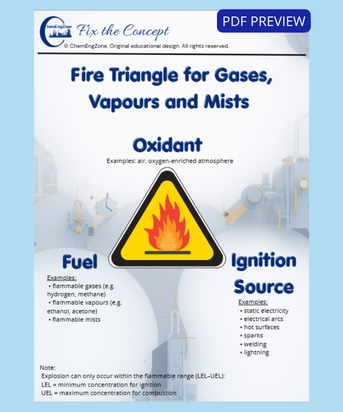
A clear diagram showing the three essential elements of combustion: heat, fuel, and oxygen.
Useful for fire safety training, technical awareness, and introductory process safety education.
Get the Fire Triangle Diagram
A simple visual reference to support training sessions and basic process safety understanding.
Other Articles You May Find Useful
- Safety Management System: The 4 Pillars Explained
- What Is HAZOP Analysis? Example and Template
- ATEX Zone Classification: Gas, Vapour & Mist
- Safety Interlocks in Chemical Plants: P&ID Example
- LOPA & SIL: Practical Examples
- Control Valve Leak and System Isolation
Useful Engineering References
OSHA – Process Safety Management
Official guidance on process safety principles for industrial and chemical facilities.
FAQ
What is the Fire Triangle diagram?
The fire triangle diagram shows the three essential elements required for combustion: fuel, oxygen, and heat. It is the basic model used in fire safety and process safety to understand how fires start and how they can be prevented.
What are the components of the Fire Triangle?
The fire triangle consists of three elements: fuel, oxygen, and heat. Removing any of these elements will stop the combustion process, which is the basis of fire prevention strategies.
What does the Fire Triangle consist of?
The fire triangle consists of three essential elements: fuel, oxygen, and heat. Removing any one of these elements will stop the combustion process.
How is the Fire Triangle used in safety training?
The fire triangle is used to show how fires can start and how they can be controlled by removing fuel, oxygen, or heat.
Is the Fire Triangle used in industrial environments?
Yes. The fire triangle is widely used as a basic reference in industrial safety to understand combustion and support risk awareness.