Chemical Engineering Core Disciplines
Chemical engineering core disciplines define the fundamental subjects that form the technical foundation of every chemical engineering degree.
Although the structure of degree programs may vary between universities and countries, these core disciplines are consistently taught worldwide. Together, they provide the scientific and engineering tools required to analyze, design, and operate industrial processes.

Mathematics and Numerical Methods
Mathematics and numerical methods provide the quantitative tools used throughout chemical engineering. Calculus, differential equations, linear algebra, and numerical techniques are essential for formulating and solving engineering problems.
These tools are applied to describe physical and chemical systems, perform material and energy balances, analyze transport phenomena, and simulate process behavior. They allow engineers to move from qualitative understanding to quantitative prediction.
Without a solid mathematical foundation, it would not be possible to model process dynamics, evaluate system performance, or support engineering decisions with reliable calculations.
General and Physical Chemistry
In chemical engineering, chemistry is used to define what reactions and transformations are actually possible under industrial conditions.
It provides the basis for evaluating reaction feasibility, equilibrium limits, phase behavior, and material compatibility.
Chemical engineers use chemistry to understand how substances behave when subjected to real operating conditions such as elevated temperature, pressure, and concentration. This includes assessing reaction pathways, side reactions, solvent effects, and the impact of impurities on process performance.
Rather than focusing on molecular structure for its own sake, chemistry in chemical engineering is applied to support process decisions: selecting raw materials, defining operating windows, preventing unwanted reactions, and ensuring that materials of construction remain compatible with the process environment.
Material and Energy Balances
Material and energy balances form the backbone of chemical engineering reasoning.
They are used to quantify how mass and energy flow through a process, independent of equipment details or control strategies.

At their core, balances enforce conservation laws: mass is neither created nor destroyed, and energy is transferred or transformed according to well-defined mechanisms. These principles allow engineers to calculate flow rates, compositions, heat duties, and losses across individual units and entire plants.
In industrial practice, material and energy balances are used to:
- verify process consistency,
- size equipment and utilities,
- identify inefficiencies or losses,
- troubleshoot deviations during operation.
They are also the starting point for any process modification. Before changing equipment, control logic, or operating conditions, an engineer must understand how the change affects overall mass and energy distribution. Without this step, downstream problems are almost guaranteed.
Balances are not an academic exercise: they are the first quantitative check that separates a feasible process from one that only works on paper.
Thermodynamics
Thermodynamics defines the physical limits within which a chemical process can operate.
It determines whether a transformation is possible, how much energy is required, and where equilibrium conditions will settle.
Chemical engineers use thermodynamics to analyze phase equilibria, reaction equilibria, and energy exchanges between systems and their surroundings. This includes vapor–liquid equilibrium, heat effects of reactions, and the relationship between pressure, temperature, and composition.
In practical terms, thermodynamics answers questions such as:
- Can this separation be achieved at reasonable pressure and temperature?
- What is the minimum energy required for this operation?
- Where are the equilibrium constraints that limit conversion or purity?
Thermodynamics does not describe how fast a process occurs or how equipment is built. Instead, it sets the boundary conditions that every real process must respect. Ignoring these limits leads to designs that are inefficient, unstable, or physically impossible.
For this reason, thermodynamics underpins unit operations, reaction engineering, and energy optimization across the entire plant.
Transport Phenomena
Transport phenomena describe how momentum, heat, and mass move through a system.
While material and energy balances quantify how much enters and leaves a process, transport phenomena explain how these quantities are transferred and what resists that transfer.
This subject provides the theoretical framework needed to predict flow behavior, heat exchange, and species diffusion in real processes. It allows engineers to move beyond ideal assumptions and account for gradients, resistances, and non-uniform conditions inside equipment.
Transport phenomena are typically divided into three closely related areas: fluid mechanics, heat transfer, and mass transfer. Together, they form the physical foundation behind most industrial operations.
Fluid Mechanics
Fluid mechanics focuses on the motion of liquids and gases under the action of forces.
Chemical engineers use it to analyze flow regimes, pressure losses, and velocity distributions in pipes, channels, and equipment.
Understanding fluid behavior is essential for designing piping systems, selecting pumps and compressors, and ensuring stable and predictable operation under different flow conditions.
Heat Transfer
Heat transfer addresses how thermal energy is exchanged between systems.
Conduction, convection, and radiation are analyzed to determine heat fluxes, temperature profiles, and thermal resistances.
In industrial processes, heat transfer principles are applied to heating, cooling, energy recovery, and thermal integration, directly influencing efficiency, safety, and operating costs.
Mass Transfer
Mass transfer describes how chemical species move due to concentration gradients.
This subject is essential for understanding separation processes, phase contact, and interfacial phenomena.
Rather than focusing on specific equipment, mass transfer provides the underlying principles needed to predict how quickly and effectively components can be separated or absorbed.
Chemical Reaction Engineering
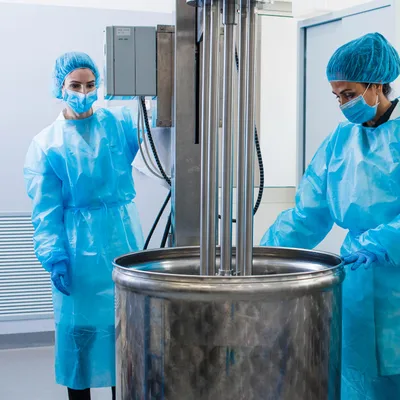
Chemical reaction engineering examines how chemical reactions behave when scaled up from laboratory conditions to industrial systems.
It focuses on reaction kinetics, residence time, and the interaction between chemical reactions and transport phenomena.
This subject allows engineers to predict conversion, selectivity, and heat generation under real operating conditions. It also highlights the constraints imposed by reaction rates and heat removal, which often define the feasible operating window of a process.
Reaction engineering is essential for translating chemical feasibility into reliable and controllable industrial production.
Process Control
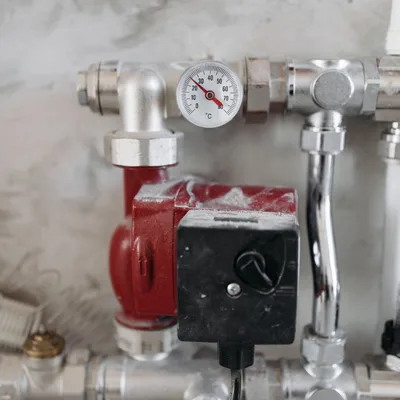
Process control addresses how operating conditions are maintained over time despite disturbances and uncertainties.
Real processes are dynamic: feed composition changes, ambient conditions vary, and equipment performance degrades.
Control theory provides the tools needed to keep variables such as temperature, pressure, level, and composition within acceptable limits. Without proper control, even a well-designed process cannot operate safely or efficiently.
This subject introduces engineers to dynamic behavior, stability, and the logic required to manage real-time process operation.
Process Safety and Engineering Practice
Process safety integrates technical knowledge with risk awareness and engineering judgment.
It focuses on identifying hazards, understanding failure scenarios, and ensuring that processes remain within safe operating limits.
This area connects design decisions, operating conditions, and control strategies with their potential consequences. It emphasizes that safety is not an add-on, but an inherent part of engineering practice.
Through this subject, chemical engineers learn to evaluate risk, apply safeguards, and translate technical analysis into responsible industrial decisions.
A practical overview of how these concepts are structured at plant level is provided in the article 4 Safety Management System Pillars , which outlines the key elements required to manage process risk consistently.
Conclusion
While these subjects define the theoretical foundation of chemical engineering, their value becomes clear only when applied in real industrial environments.
Understanding material balances, thermodynamics, transport phenomena, and reaction behavior is what allows engineers to design, operate, and troubleshoot actual plants.
For a concrete illustration of how this knowledge translates into daily engineering work, you can refer to the article What Does a Chemical Engineer Do in Industrial Environments?, which walks through practical responsibilities and real process scenarios.
Ing. Ivet Miranda
Other Articles You May Find Useful
• The 4 Laws of Thermodynamics
• Fluid Dynamics Basics for Engineers
• What is Heat Transfer? Definition and Types
• Unit Operations in Chemical Engineering: Types and Examples
• What Is HAZOP Analysis? Example and Template