← Back
Skip to content

Unit Operations

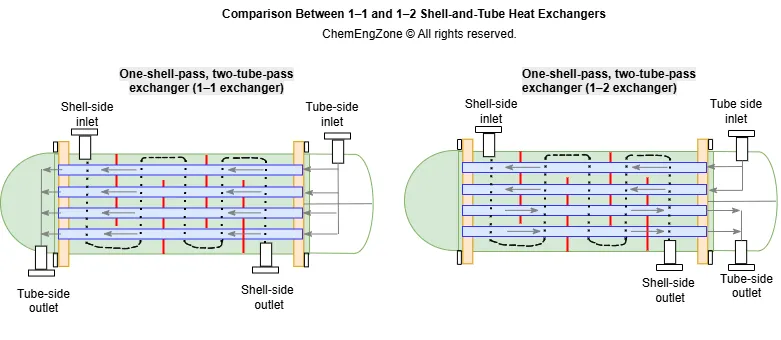
Comparison between 1–2 and 1–1 shell and tube heat exchanger design configurations showing tube-side passes and shell-side flow pattern.

Shell and Tube Heat Exchanger Design

A shell and tube heat exchanger transfers heat between two separated fluids using a tube bundle inside a cylindrical shell. This article explains its construction, flow arrangements (1–1 and 1–2), and key design principles used in chemical engineering.
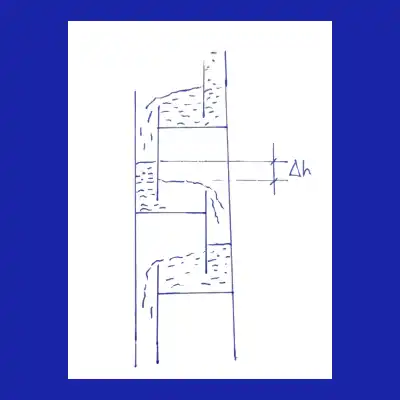
Diagram of a distillation tray column showing liquid flow and height difference Δh between trays

Tray Efficiency in a Distillation Column

Discover the key differences between tray and packed columns in distillation. This guide explains efficiency metrics, pressure drop, flow range, maintenance, and typical industrial uses with a clear infographic.

Rubby formation in methanol auto-thermal reformer showing catalyst damage and silica deposition inside heat exchanger tube.

Heat Exchanger Fouling and Rubby Formation

Heat exchanger fouling in methanol plants can be a symptom of a deeper problem inside the Auto-Thermal Reformer (ATR): Ruby (or Rubby) Formation. This phenomenon occurs when impurities and hot spots weaken the catalyst support, releasing silica particles that deposit on exchanger tubes and reduce thermal efficiency. Several mitigation approaches are applied in industry — among them Steam Washing, impurity control, optimized ATR operation, and improved catalyst formulations — to limit fouling and maintain reliable plant performance.

What is Heat Transfer? Definition and Types

Heat transfer is a fundamental unit operation in chemical engineering, essential for energy recovery and process control. This article explains the main industrial configurations: process-to-process heat exchange, utility-based systems such as reboilers and condensers, and integrated solutions like jacketed reactors. Direct-contact cases such as cooling towers and scrubbers are also considered, showing how thermal energy is managed in real plants.

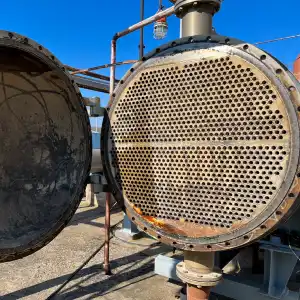
Close-up of a shell-and-tube heat exchanger used in industrial heat transfer operations

Unit Operations in Chemical Engineering: Types and Examples

The five main unit operations in chemical engineering are Heat Transfer, Mass Transfer, Mechanical Operations, Fluid Transport, and Membrane Separation. These categories form the foundation of industrial processes, from energy recovery and separation to particle handling and fluid distribution.

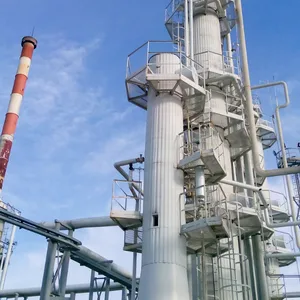
Tall distillation column used in mass transfer operations for component separation in chemical processing

How Distillation Works: Engineering Explanation

What is the Distillation Process? Distillation is a method used to separate the components of a liquid mixture by exploiting differences in their volatility. When a liquid mixture is heated, part of it vaporizes. The vapor phase is richer in the more volatile components, while the remaining liquid becomes enriched in the less volatile ones. This… Read More »How Distillation Works: Engineering Explanation

Get Free PDF